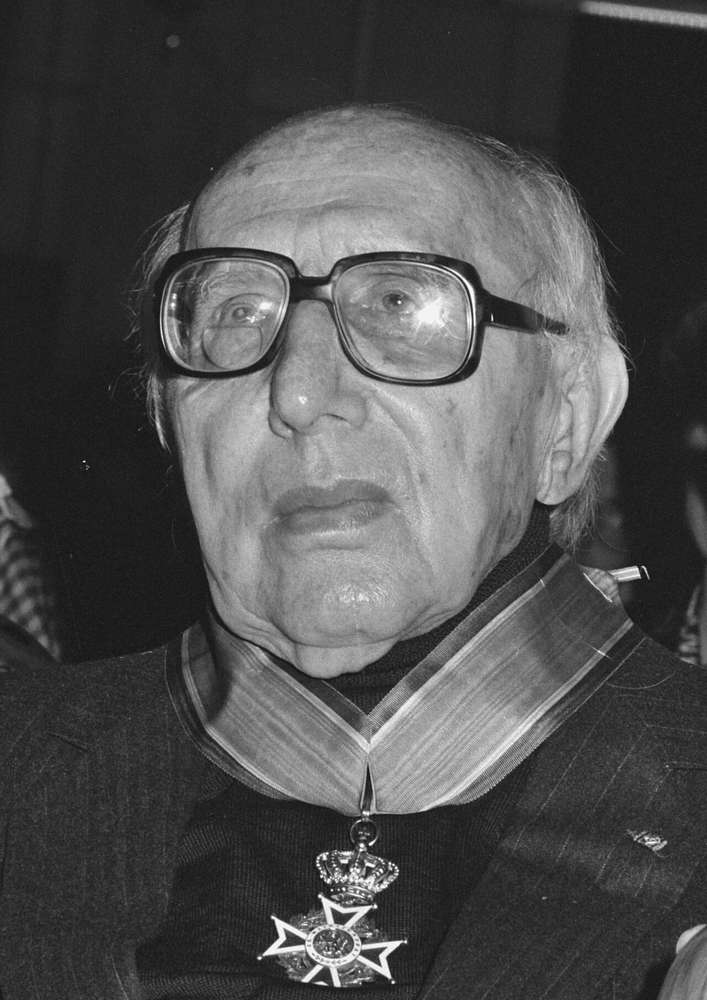
Norbert Elias replaces the image of independent individuals with figurations: fluid networks of mutual dependence. Power exists within these dependencies and varies in degree. Habits, emotional control, and group boundaries are shaped through long-term processes. His sociology helps you see both how you are connected to others and where the balance of these relationships can shift.

Figurations and Interdependence
A figuration is a pattern of people who are mutually dependent on one another. Elias uses, among other things, the image of a game in which the participants’ moves shape a process that no one controls alone. The individual and society are therefore not two separate things. The individual’s possibilities arise within the network of relationships, and the network exists through the participants’ actions.
This interdependence is rarely equal. An employer needs labor, but the employee may have a more urgent need for income. A child and a parent need each other in different ways. For Elias, power is not something a person fully possesses, but rather a balance within the relationship that can shift as resources, alliances, and alternatives change.
For the good life, this means that autonomy is not the absence of dependence. The question is which dependencies are recognized, mutual, and open to influence. Hidden dependencies can give the stronger party the opportunity to present their power as natural independence.
Create a figuration map
Purpose: To identify which dependencies actually underpin a situation and how the balance of power arises.
Choose a specific situation in which several people or organizations influence the same outcome.
Write down what each party needs from the others in order to continue its activities or daily life.
Identify which parties have more options, more time, information, or the ability to walk away.
Observe how a decision by one party changes the possible moves of the others.
Identify a resource, alliance, or rule that could make the dependency more reciprocal.
Afterward: The figuration map shifts the analysis from who is powerful to how a balance of power is produced and can be shifted.
Limitations and when not to use this exercise: Do not use the map to negotiate alone in a relationship involving threats or violence. Seek support and safe alternatives first.
The Civilizing Process and the Social History of Self-Control
In *The Civilizing Process*, Elias examines long-term changes in customs, emotional regulation, and self-control in Western Europe. As state power monopolized violence and chains of dependency grew longer, people needed to anticipate the reactions of more others. External coercion was gradually transformed into more stable self-monitoring.
For Elias, civilization does not mean that certain peoples are more worthy. It denotes a historical process involving increased demands for restraint, foresight, and emotional control. This process can foster safer social interactions but also generate shame, strong self-censorship, and a distancing from bodily functions. Furthermore, it can be reversed through processes of decivilization.
This analysis gives everyday self-control a sociological dimension. The fact that an impulse feels shameful or unthinkable need not be a timeless inner reality. It may have been shaped by long chains of social demands. Practical freedom does not arise by discarding all self-control , but by distinguishing protective consideration from paralyzing self-coercion.
Trace a rule from external demands to self-control
Purpose: To examine how everyday self-monitoring has been shaped and what role it plays today.
Choose an area where you automatically control your body, emotions, language, or pace in the presence of others.
Recall the corrections, role models, or institutions that taught you what was considered appropriate.
Describe what kind of social interaction this self-control protects or enables.
Note when this same control becomes disproportionate, shame-inducing, or hinders necessary openness.
Try a small adjustment that maintains consideration but reduces unnecessary self-restraint.
Afterward: Self-control is neither solely a virtue nor oppression. Its value depends on the relationship it serves and how flexible it is.
Limitations and when to avoid this exercise: Do not experiment with self-control where safety, consent, or professional guidelines require clear boundaries.
Insiders and Outsiders
In their study of the established and the outsiders, Elias and John L. Scotson showed how two groups that were similar in many respects could attain very different statuses. The established group’s longer-standing cohesion gave it control over associations, information flows, and local reputation. It could use the best examples from its own group and the worst from the outsider group to create a moral hierarchy.
Stigmatization, therefore, did not rest solely on individual prejudices. It was sustained by group cohesion, gossip, access, and a monopoly over local institutions. Outsiders found it more difficult to create a shared counter-narrative because their networks were weaker and newer.
For the good life, the analysis shows why goodwill is not enough. A group needs to examine who has informal shortcuts, interpretive privilege, and access to the contexts where reputation is formed. Belonging requires participation in the group’s institutional life, not just a polite greeting.
Examine an established boundary for outsiders
Purpose: To see how time, networks, and reputation create unequal belonging among similar participants.
Choose an environment where old and new participants, the core and the periphery, or insiders and outsiders are distinguished from one another.
Map out who knows whom, who relays information, and who is allowed to represent the group.
Note how positive examples from the established group and negative examples from the outsider group are used in narratives.
Identify an association, channel, or ritual controlled by the established group.
Suggest a concrete path to participation, representation, or collaborative work that transforms the network.
Afterward: Outsider positions are broken down through changed relationships and institutional access, not just by the established group becoming more welcoming.
Limitations and when not to do this exercise: Do not single out individuals publicly. Address the pattern in a way that does not further marginalize already vulnerable participants.
Engagement and Distance
Elias distinguishes between engagement and distance in knowledge and action. Complete distance is impossible because the observer is themselves part of social interdependencies. But complete engagement can make it difficult to see processes that extend beyond one’s own fear, loyalty, or anger.
Detachment does not mean coldness or indifference. It is the ability to make one’s own position part of the analysis, to trace longer chains of causality, and to compare temporal perspectives. At the same time, engagement provides insight into what is at stake and why the issue matters.
In a good life, people need to be able to move between these states. Those who always keep their distance risk irresponsible observation. Those who never take a step back can get stuck in immediate reaction. A better analysis preserves compassion while broadening the picture.
Describe the same situation from both an engaged and a detached perspective
Purpose: To combine the significance of experience with a broader and more relational analysis.
Choose a conflict or issue that affects you but is not urgent.
Briefly describe what you feel, what you want to protect, and what you fear might happen.
Then describe the same sequence of events as a chain of dependencies, prior events, and the possible scope of action for multiple parties.
Compare what the engaged perspective saw that the detached perspective missed, and vice versa.
Formulate an action that both expresses the value and takes the broader process into account.
Afterward: Distance should improve the direction of engagement, not eliminate it. Engagement should hold the analysis accountable to real people.
Limitations and when not to do the exercise: Do not do the exercise in the midst of an acute crisis. Stabilization, safety, and support must come first in such situations.