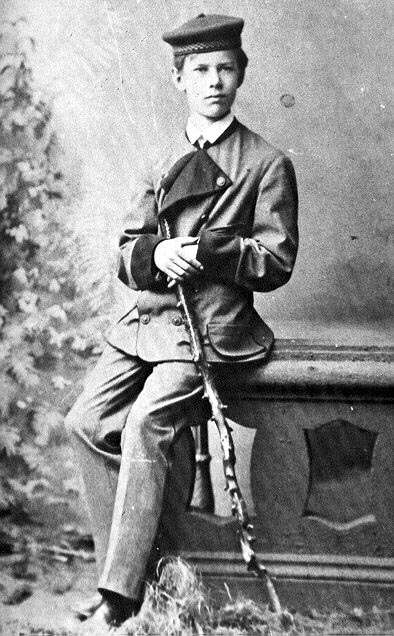
Max Weber provides tools for understanding why people act, how modern organizations make the world predictable, and why effective means cannot determine the goals of life. His concepts help you distinguish motives for action, examine rationalization, and hold values accountable for real consequences.

Social Action and Understanding
For Weber, an action is social when it has subjective meaning and is oriented toward other people’s actual or expected behavior. Sociology must therefore both view the action from the outside and attempt to understand what the actor makes of it. Understanding does not mean agreeing. It means reconstructing the meaning that makes the action comprehensible.
Weber distinguishes, in ideal-typical terms, between goal-rational, value-rational, affective, and traditional action. Goal-rational action selects means based on a goal. Value-rational action is performed because it is perceived as right in itself. Affective action is driven by an emotional state, and traditional action follows an ingrained habit. Real-world actions often contain multiple motives.
This classification is an analytical tool, not four personality types. It helps you understand why a conflict isn’t always resolved with better information. If one party is defending a value and the other is optimizing an outcome, they are, in part, talking about different things.
Identify the motives behind a real-life action
Purpose: To understand an action without reducing it to a single motive or personal trait.
Choose a specific action that you or someone else recently performed in a social situation.
Describe what goal and what expected consequences may have played a role.
Note which value, emotion, and habit may also have influenced the action.
Ask which motive dominated in the moment and which was used to explain the action afterward.
Explain how this understanding changes the next conversation or decision without excusing harm.
Afterward: An understandable action can still be unjust. Understanding improves the explanation and the possibility of accountability, but it does not replace moral judgment.
Limitations and when not to use this exercise: Do not attribute motives to others as if they were established facts. Ask the person directly whenever possible, and distinguish between observation and interpretation.
Ideal Types as Tools for Comparison
In Weber’s view, an ideal type is a purely analytical conceptual construct. It brings together certain characteristics so that real-world cases can be compared and deviations become apparent. An ideal type does not mean a moral ideal, nor does it mean an average. A pure bureaucracy or a purely goal-rational action rarely exists in its complete form.
The ideal type sharpens the analysis when reality is messy. By comparing an organization with the quintessential traits of bureaucracy, one can see where personal dependencies, informal shortcuts, or unclear mandates take over. The deviation is not automatically a flaw. It is something that needs to be explained.
When it comes to the good life, ideal types can prevent both vagueness and labeling. Instead of calling an environment “bureaucratic” as a term of derision, one can ask what traits are present, what they enable, and where they create problems.
Construct an ideal type and compare it with reality
Purpose: To create a clear comparison without confusing the model with reality.
Choose a recurring social phenomenon, such as a productive meeting, a fair rule, or a well-functioning community.
Identify four to six characteristics that the phenomenon would have in a clearly defined analytical form.
Compare a real-world case with each characteristic and note both similarities and differences.
Examine which social mechanism might explain the most significant deviation.
Use the comparison to formulate a question or a change, not to give the case a definitive evaluation.
Afterward: The ideal type is a tool for thinking. Its value lies in the questions the comparison raises, not in forcing reality to fit the model.
Limitations and when the exercise should not be done: Do not use the ideal type as a diagnosis of a person. It is intended to describe social forms and patterns of action.
Rationalization and Bureaucracy
Weber describes rationalization as a long process in which action and organization are increasingly governed by calculation, rules, specialized knowledge, and predictable procedures. Bureaucracy is a powerful form of this. Clearly defined offices, documentation, and uniform rules can reduce arbitrariness and make large-scale operations possible.
This same strength creates a risk. The means can become so dominant that the values of the enterprise are lost sight of. What is easy to measure takes precedence over what is important but difficult to measure. The individual then encounters a system that is logical in every part but unreasonable in its overall effect.
A Weberian analysis of the good life is therefore not a rejection of rules. It asks what goals the rules serve, what values are being sacrificed, and where professional judgment or democratic scrutiny is needed. Efficiency can only assess means once the goal has been clearly stated.
Examine when a means has become an end
Purpose: To reconnect a rule, metric, or routine to the value it is meant to serve.
Choose a rule, indicator, or routine that affects daily life in an organization.
Write down the original problem it was intended to solve.
Describe what behavior it actually rewards and what important work becomes invisible.
Identify where people follow the means even though the goal is being undermined.
Suggest how the measure can be supplemented, limited, or subject to professional and democratic judgment.
Afterward: Rationalization requires counter-rationalization: clear reasons for when rules apply, when exceptions may be made, and who is responsible for the big picture.
Limitations and when the exercise should not be conducted: Do not violate safety, rights, or equal treatment rules on your own initiative. Changes must be handled by the appropriate authority and documented.
Way of Life, Conviction, and Responsibility
Weber uses the concept of “way of life” to describe a more coherent way of organizing life around values and practices. It is more than just lifestyle in terms of taste or consumption. The way of life shows how work, relationships, time, and duties are given direction. Modern people are simultaneously confronted with several competing spheres of values that cannot be reconciled through a single technical calculation.
In his discussion of politics, Weber distinguishes between the ethics of conviction and the ethics of responsibility. The ethics of conviction adheres to a principle and judges an action’s fidelity to it. The ethics of responsibility also takes responsibility for foreseeable consequences. Weber does not render one of these unnecessary. An action without conviction lacks direction, while a conviction without responsibility can turn a blind eye to its impact on others.
The good life therefore requires both values and a connection to reality. A person needs to be able to say what must not be compromised, but also to change their approach when the consequences contradict the purpose. A way of life is an ongoing sequence of actions, not a fixed label defining who one is.
Write a defined plan for your way of life
Purpose: To align a value with practices, accountability, and a feasible daily rhythm.
Choose a value that you want to shape a specific area of your life over the next month.
Describe which recurring actions would express that value and which habits work against it.
List the people who will be affected and any foreseeable costs or conflicts that may arise.
Decide on a practice that upholds the conviction while mitigating an unacceptable consequence.
Set a date to review both your adherence to the value and the actual results.
Afterward: A way of life makes values visible within the order of time and relationships. A value that never changes a practice functions primarily as a self-description.
Limitations and when the exercise should not be done: Do not turn other people’s lives into material for your moral project. In cases of shared obligations, change must be negotiated with those affected.